
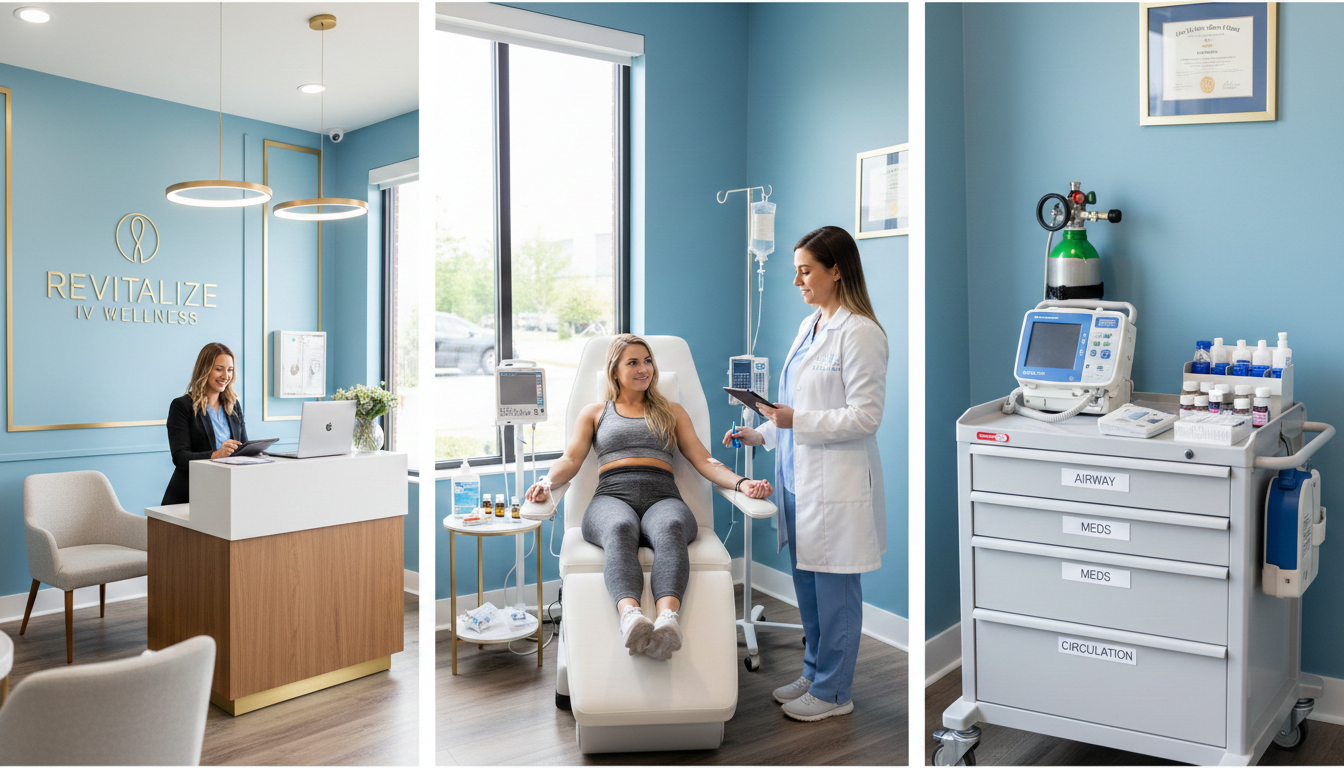
The wellness industry is booming and IV hydration therapy is one of its fastest-growing segments. Whether you want to open a brick-and-mortar drip bar, launch a mobile IV service, or build a hybrid model, 2026 is a promising time to enter this market. But like any healthcare-adjacent business, success depends on more than enthusiasm. It requires the right licenses, the right team, and a clear business plan.
This guide walks you through everything you need to know from legal requirements and startup costs to marketing and scaling so you can launch your IV hydration business with confidence.
1. IV Hydration Business Model
IV hydration businesses offer intravenous infusions of vitamins, minerals, electrolytes, and other nutrients directly into the bloodstream. Common treatments include hydration drips, immune boosters, hangover recovery, athletic performance blends, and beauty infusions.
There are three primary business models to consider:
- Brick-and-mortar IV lounge or drip bar — a dedicated physical space where clients visit for treatments
- Mobile IV therapy — nurses travel to clients at their homes, hotels, offices, or events
- Hybrid model — combines a fixed location with a mobile fleet for broader coverage
Each model has its own cost structure and scalability. Mobile operations have lower overhead, while storefronts offer brand visibility and recurring foot traffic. Many successful businesses start mobile and expand into a physical location as revenue grows.
2. Research Legal and Licensing Requirements
IV hydration therapy is a medical procedure, which means it operates in a heavily regulated space. Requirements vary by state, but the following are common across most jurisdictions:
- Medical director — most states require a licensed physician (MD or DO) to oversee your protocols and sign standing orders
- Registered Nurses (RNs) or Nurse Practitioners (NPs) to administer infusions
- Business license and DBA (Doing Business As) registration
- State health department permits or clinical facility registration
- Professional liability (malpractice) insurance and general business insurance
Some states, including California and Texas, have specific regulations around IV therapy businesses. Before you do anything else, consult a healthcare attorney familiar with your state’s laws. This step is non-negotiable.
Read More :- 11 Interesting Jobs for Nurse Practitioners
3. Write Your Business Plan
A solid business plan is your roadmap and your pitch document if you seek investors or a business loan. Key sections to include:
- Executive summary — what your business does and who it serves
- Market analysis — local demand, competitor landscape, target demographics
- Service menu — your core drip offerings and any add-ons
- Revenue model — pricing strategy, projected monthly clients, break-even analysis
- Marketing plan — how you’ll attract and retain customers
- Operational plan — staffing, scheduling, supply chain, and software tools
Be realistic with your financial projections. A mobile IV business can break even in 3–6 months with consistent bookings; a storefront typically takes 9–18 months to reach profitability.
4. Estimate Your Startup Costs
Startup costs vary widely depending on your business model. The table below provides a ballpark breakdown to help you plan your initial investment:
| Expense Category | Mobile Business | Storefront / Drip Bar |
| Business Registration & Legal Fees | $500 – $2,000 | $1,000 – $5,000 |
| Medical Director Agreement | $500 – $1,500/mo | $500 – $2,000/mo |
| Nursing Staff (initial) | $3,000 – $6,000/mo | $5,000 – $12,000/mo |
| IV Supplies & Inventory | $1,000 – $3,000 | $3,000 – $8,000 |
| Equipment (IV poles, bags, kits) | $500 – $2,000 | $2,000 – $6,000 |
| Insurance (liability & medical) | $1,500 – $4,000/yr | $3,000 – $8,000/yr |
| Website & Booking Software | $500 – $2,000 | $1,000 – $3,000 |
| Marketing & Branding | $500 – $2,000 | $2,000 – $8,000 |
| Retail Space (lease + build-out) | N/A | $5,000 – $30,000+ |
| Vehicle (for mobile ops) | $3,000 – $10,000 | N/A |
| Total Estimated Startup Range | $8,000 – $25,000 | $20,000 – $80,000+ |
5. Build Your Team
Your team is your most valuable asset — and your biggest liability if you cut corners. Here’s who you’ll need:
- Medical Director — an MD or DO who reviews your protocols, provides standing orders, and offers oversight. They don’t need to be on-site full-time, but must be reachable and legally accountable.
- Registered Nurses (RNs) — RNs start IVs and monitor patients. In most states, LPNs and paramedics cannot start peripheral IVs independently.
- Nurse Practitioners or Physician Assistants — if you want to offer more advanced treatments or health assessments, an NP or PA gives you that clinical range.
- Business Manager / Operations Lead — as you scale, you’ll need someone managing scheduling, supplies, billing, and customer service.
Consider starting with 1–2 part-time RNs and scaling your staffing as client volume grows. Many IV hydration businesses hire nurses as independent contractors, which reduces overhead — but consult an employment attorney to ensure you’re classifying workers correctly.
Read More :- How to Find a Medical Director for Your Med Spa
6. Source Equipment and Supplies
Reliable supply chains are critical. You can’t cancel appointments because your IV bags didn’t arrive. Work with licensed medical distributors such as Henry Schein, McKesson, or Bound Tree Medical. Key supplies include:
- IV bags (normal saline, lactated Ringer’s, or D5W base solutions)
- IV catheters and needles (various gauges)
- Tubing, drip sets, and extension sets
- Alcohol swabs, tourniquets, and medical tape
- Vitamins and additives (Vitamin C, B-complex, Magnesium, Glutathione, Zofran, etc.)
- Sharps containers and medical waste disposal service
Always store medications at the correct temperature and follow expiration protocols. Your medical director should review your formulary and storage procedures.
Read More :- How to Find a Medical Director for Aesthetic Clinics
7. Set Up Operations and Technology
Smooth operations start with the right tools. At minimum, you’ll need:
- Online booking software — platforms like Jane App, Vagaro, or a custom-built solution let clients book, pay, and receive intake forms online
- Electronic health records (EHR) — keep client medical histories, consent forms, and treatment records HIPAA-compliant
- Point-of-sale system — for in-person payments and product upsells
- HIPAA-compliant communication tools — for client intake, reminders, and follow-ups
For mobile operations, a reliable vehicle wrap and branded scrubs serve as rolling advertisements. Equip each mobile kit with everything needed for 6–10 sessions before restocking.
8. Market Your IV Hydration Business
With the clinical side locked in, it’s time to attract clients. The most effective marketing channels for IV hydration businesses include:
- Local SEO — optimize your Google Business Profile so you show up when people search “IV hydration near me”
- Social media — Instagram and TikTok perform well for before/after wellness content and behind-the-scenes drip bar aesthetics
- Partnerships — collaborate with gyms, spas, sports teams, bridal suites, and corporate wellness programs
- Event bookings — offer mobile IV services at marathons, music festivals, weddings, and bachelorette parties
- Referral programs — reward existing clients for referring friends and family
Memberships and packages are powerful retention tools. Offer a monthly hydration membership (e.g., 2 drips per month at a discounted rate) to build predictable recurring revenue.
9. Price Your Services
Pricing should reflect your costs, your market, and your positioning. In 2026, typical IV drip pricing ranges from $99 to $299 per session depending on the formulation and market. Premium add-ons like NAD+, Glutathione pushes, or personalized vitamin cocktails can push individual session revenue significantly higher.
A general rule: price your core drips to cover your direct costs (supplies + nurse time) with a healthy margin, then use premium add-ons to increase average ticket value. A session costing $40 in supplies and $35 in nurse labor should be priced at $150–$200 minimum for viable margins.
Conclusion
Starting an IV hydration business in 2026 is a real opportunity but it demands careful planning, legal compliance, and a commitment to clinical quality. The businesses that thrive long-term are those that prioritize patient safety, build strong referral networks, and deliver a consistently excellent client experience.
Start with the legal framework, build your team, and let your marketing follow. With the right foundation in place, an IV hydration business can be both personally rewarding and highly profitable.
Read More :- How to Find a Medical Director for IV Hydration Business